
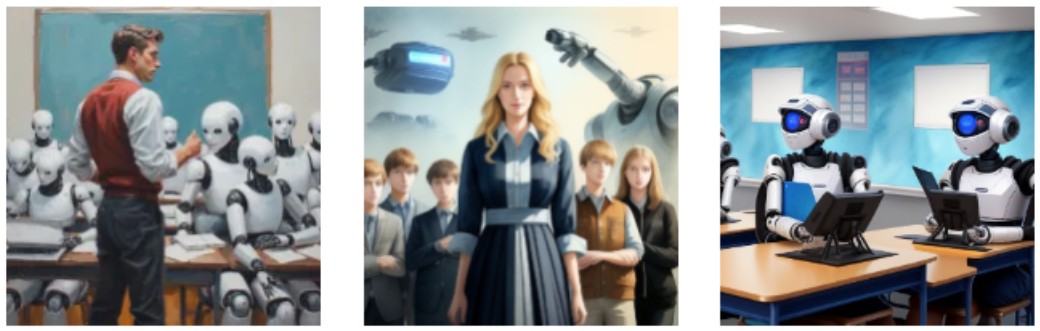
Most ELA teachers love helping students discover their own voices, discuss complex ideas, and think deeply about important issues. So why are so many of us excited about handing over such important work to a machine?
It’s a little scary how quickly some schools have jumped into the AI deep end. What is going to happen to our craft as English teachers? How can we protect our craft if everyone around us is opting for AI lesson plans, AI-generated feedback, and more? Will reading, writing, and thinking continue to matter in k-12 education if even the teachers are outsourcing their own reading, writing, and thinking tasks to a computer? What will happen to students’ foundational ELA skill sets if this is the direction in which education is going?
Convenience vs. Doing Our Job
We’re all exhausted. I get it. Lesson planning, grading piles of essays, parent emails at 10 p.m., endless admin demands and new initiatives… It’s relentless. Many teachers are using AI to help them brainstorm, plan, or grade simply because they see it as a matter of survival. Tools like Diffit can quickly adapt texts for multilingual learners or different reading levels, saving hours and possibly providing something differentiated when students would otherwise get nothing differentiated at all.
But I think we need to push back on this: When we outsource the core of what we do (things like planning meaningful units, crafting HUMAN-TO-HUMAN feedback, modeling original thought), we become hypocrites. How can we tell students how important it is to be able to read and write well and then be unwilling to do that work ourselves? How can we beg them to use their brains and then say, “I’m not going to use my own brain on this one…”
High school students, especially, notice. They see when teachers are using AI for reports, recommendation letters, or even grading, and it takes away from the message that their own thinking matters.
(Need help writing REAL letters of recommendation? Try this!)
An AI Unit You Can Try
Consider spending 2-3 weeks learning about AI with your students. You can cover how it’s trained, what it actually is, and its limitations (rather than rushing to integrate it slappy dappy).
What You Can Do
- Students read a short story, answer open-ended questions by hand, then compare their responses to ChatGPT’s answers on the same story. Here’s what you’ll see: AI hallucinates details and makes errors because it hasn’t been fed the text first. Students will often be shocked. Many of them assume “If it’s on the internet somewhere, AI knows all about it.”
- Explore student privacy risks: Talk about how unregulated AI tools can leak sensitive data you put into them with shocking ease.
- Discuss “AI psychosis.” These are the cases where confident-sounding AI hallucinations can lead vulnerable users down dangerous rabbit holes or suggest they do things that will be bad for them.
- Examine the deadening effect of AI on creativity. What would it be like if we had all of our students generating Canva presentations with AI-produced & eerily similar/generic slides, images, and structures? What about if our favorite candles now have AI “art” on the labels instead of inspired watercolor pictures from a real artist? What would this do to us as people? As a society?
Then, try a final essay: “Should schools use AI in the classroom?” You might be shocked to find that most students, including those performing below grade level, will say no. They grasp the ethical issues, limitations, and threat to their own growth that AI poses.
Want more ideas about how to combat AI use in your classroom? Read this post!
The Bigger Picture Concerns That Matter for ELA Teachers
- The Environmental and Ethical Cost: Massive data centers consume enormous amounts of water and energy. Training data often scrapes authors’ work without compensating them. As English teachers, we have a unique responsibility to care about stories, voices, and intellectual property. We can also be a voice against harming the environment and adding to the rising cost of living via increased utility costs due to AI in an area.
- The Loss of Critical Thinking Skills: Our students’ brains are still developing. Relying on AI for ideas, outlines, or even full drafts takes away the struggle and thinking that builds real skills, not just academic, but also personal ones like perseverance and grit. When we receive a ton of AI-generated “student work,” students have learned next to nothing.
- The “Inevitable” Myth: Think about the tech hype of the past (the Dot Com bubble, NFTs, the Metaverse…). We don’t have to accept this idea that new tech is “inevitable,” so let’s all start using it without a second thought; this is an unserious and uncritical approach that does not serve our purpose as ELA teachers, especially not when we’re talking to adolescents who already struggle sometimes with focus and originality. If you have coworkers who are gushing about their use of AI or teaching the kids to use it, it is OKAY to gently push back on this by asking questions and/or attempting to get THEM to question what they are doing!
Practical Ways to Teach Against Over-Reliance on AI
- Low-Tech Defaults: Handwritten drafts in class. Physical books. In-class essays. Post-its and highlighters. Teach your class as a HUMAN class. ELA, English Lit and Comp… these are classes about YOU, about US, about BEING PEOPLE; we need to create REAL, HUMAN work to even say we’re IN an English course.
- Build Your Own AI Unit: Make a unit that encourages students to be informed skeptics rather than passive users of AI!
- Targeted and Limited (Perhaps for Scaffolding Only): Use tools like Diffit sparingly for adapting texts, then heavily edit/review what the AI spit out, and consider discussing that process with your students. Never let an AI generate core content or assessments or feedback that should be HUMAN on kids’ writing.
- Make Thinking Visible: Require process reflections, oral defenses of writing, and peer workshops.
- Make Thinking Visible: Require process reflections or turning in elements of the writing process for points, oral defenses of writing, and peer workshops.
- Ask Questions AI struggles to Answer with Any Depth: “What surprised you about this text?” or “How does this connect to your own life?” or “What does this make you think about that we’ve discussed before in class?” The AI answers will be very flat, lack detail, and/or sound “fake earnest.”
- Model Resistance: Reuse and refine your OWN materials or use ones from other authentic teachers or purchased from an ethical creator you trust. Fight the overload teachers face instead of promoting quick AI fixes that ultimately undermine our craft and may put many of us out of a job…
For the Teachers
You’re not alone. Many experienced AND new teachers refuse to use AI (even with families and heavy workloads). If you choose to keep doing everything with your OWN mind, heart, and hands, yes, it’ll be more work, but I also think you’ll find more and deeper satisfaction with this vocation in the long run.
My favorite units and lessons have ALWAYS been the ones I built from the ground up. Let’s not take that away from teachers, old and new, with a culture of using AI for everything.
We did not enter this profession to supervise machines or BE machines ourselves. In a world that is absolutely inundated with AI-generated content, the ability to think clearly, write honestly, and feel deeply is becoming more valuable than ever. Let’s all put our heads together to do what is best for the students and for the broader culture on this one!

Connect with Me!
What do you think? Have you built a successful “AI literacy” unit? Where do you draw the line in your classroom?
Share in the comments! I’d love to hear your experiences and have my readers add to this conversation.
Follow English with Mrs. Lamp:
📷 Pinterest | 🏫 TPT Store | 📧 Email Newsletter
Related Posts You Might Love:

About the Author: Carly Lamp has taught English 11/English III (American Lit) for 13 years & AP Literature for 10 years. She creates thorough, thoughtful, and rigorous materials, units, and resources for high school English teachers through her blog and her TPT store (both named English with Mrs. Lamp). She LOVES teaching high school English and helping new teachers and homeschool parents teach with confidence!





Leave a Reply