-
 Continue reading →: Reading Questions for Are You Now or Were You Ever, by Arthur Miller
Arthur Miller’s article “Are You Now or Were You Ever?” examines the fear and paranoia during the Red Scare, paralleling it with the Salem witch trials, as with his play The Crucible. This educational activity encourages 11th graders to analyze historical and contemporary issues, fostering critical thinking, discussion skills, and…
-
 Continue reading →: Teacher’s Guide to Act One of The Crucible
Act One of The Crucible introduces key conflicts and motivations, particularly regarding the characters Abigail, Proctor, and Parris. Students often struggle with context, particularly Puritan beliefs about witchcraft. This guide provides strategies for teachers to support comprehension, including addressing themes of guilt and societal pressures while encouraging critical analysis of…
-
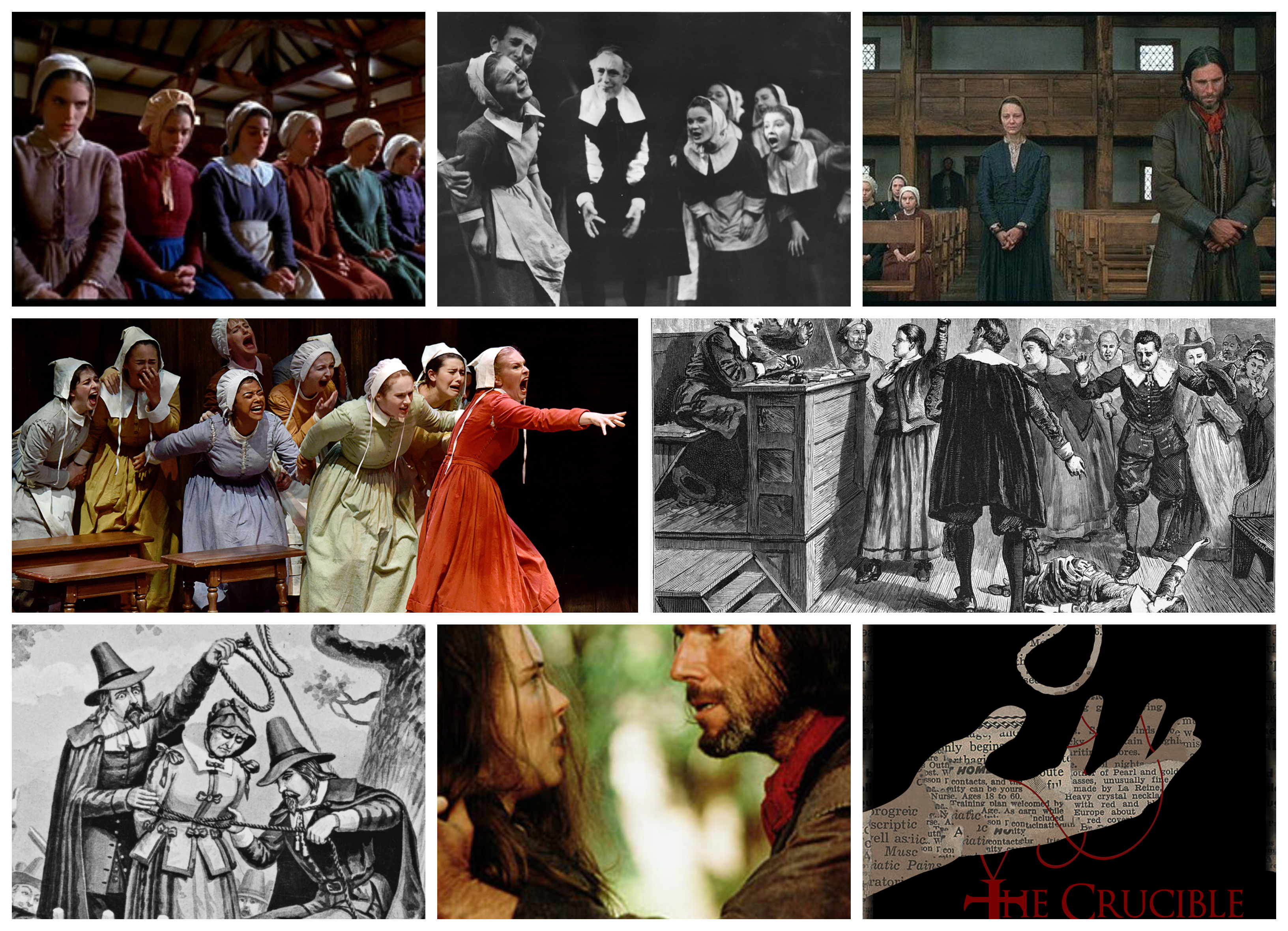 Continue reading →: English 11: Sarah Good and Tituba, Research Assignment for The Crucible
In this lesson, students are divided into groups to research Sarah Good and Tituba, key figures in the Salem Witch Trials. Each group reads their assigned material and answers specific questions. They discuss accusations, testimonies, biases in questioning, and the impact of confession, while selecting a scribe to submit their…
-
Continue reading →: The Crucible Unit Lessons and Activities: Teaching Resources, Materials, & Plans for AP Lit, 1oth, 11th, and 12th Grade English
This page provides resources for planning and teaching “The Crucible” unit. It includes links for the full text, audio, video, essay assignments, introductory research tasks, and materials on the historical context of the Salem Witch Trials and the 1950’s Red Scare. The play by Arthur Miller serves as an allegorical…
-
 Continue reading →: Background Information on The Salem Witch Trials
The Salem Witch Trials of 1692 exemplify the perilous intersection of fear, superstition, and social discord. Rooted in economic struggles and Puritan beliefs, the trials led to wrongful accusations and executions based on unverified spectral evidence. Ultimately, the hysteria waned when respected individuals were targeted and voices of reason emerged.
-
 Continue reading →: Homegoing Novel Study Unit Plans and Materials
Yaa Gyasi’s Homegoing is highly recommended for AP Literature and American Literature courses, provided teachers are aware of its explicit content. The novel explores themes of family, ancestry, trauma, and resilience across generations through alternating family histories. To effectively teach it, educators should establish background context and conduct engaging discussions,…
-
 Continue reading →: How and Why I Use Journals When Teaching Homegoing, by Ya Gyasi
The use of individual journals in exploring Homegoing encourages student engagement, particularly for those less comfortable in discussions. The prompts range from light to deep, fostering critical reflection while ensuring confidentiality and emotional safety. Regular check-ins and sensitivity to diverse backgrounds help maintain a supportive classroom environment focused on personal…
-
 Continue reading →: Why I Love Mrs. Dalloway for AP Literature Students
Mrs. Dalloway by Virginia Woolf is a pivotal text in AP® Literature, known for its depth and complexity. The novel’s innovative narrative structure, rich character exploration, and thematic relevance to identity and mental health engage students and enhance their analytical skills, preparing them for the rigors of the AP® exam…
-
 Continue reading →: How to Teach Mrs. Dalloway
Teaching Virginia Woolf’s Mrs. Dalloway involves a scaffolded approach to engage high school students effectively. By providing differentiated context readings, purposeful guiding questions, and regular comprehension checks, students build crucial analytical skills while connecting the novel’s themes to their own lives. This method fosters understanding and appreciation of Woolf’s insights…
-
 Continue reading →: Do Teachers Have to Be Entertaining?
This post compares engaging students with entertaining them. It argues that effective teaching relies on building interpersonal connections, showing enthusiasm, and using relevant examples. Teachers should strive to create an inviting atmosphere that motivates students to actively participate, ultimately enhancing their learning experiences without sacrificing academic rigor.
-
 Continue reading →: Fall Units and Resources
Carly Lamp shares new fall educational resources for high school English teachers, featuring Gothic literature units, AP Literature handouts, and 11th-grade American Literature curriculum guides. She highlights popular freebies and encourages teachers to engage with her products for enhanced learning. Several new additions are available in her store.
-
Continue reading →: The Perfect 11th Grade Gothic Literature Unit for the Month of October
This month-long Gothic literature unit is designed for 11th graders, emphasizing engaging themes and classic texts by authors like Edgar Allan Poe. The unit integrates Halloween vibes, fostering excitement through matching decor and interactive activities. It includes comprehensive resources, assessments, and differentiation strategies to cultivate deep discussions and connect classic…
-
 Continue reading →: How to Teach “The Yellow Wallpaper” to English 11 & American Lit Students
The Yellow Wallpaper is a captivating and thought-provoking Gothic story that provides a rich ground for discussions on mental health, gender roles, and societal expectations. Its historical context, symbolism, character depth, and thematic depth make it an engaging teaching material. Encourage interactive activities like debates and discussions to fully explore…
-
 Continue reading →: How Teachers Can Deal with Difficult Parents
Teachers face numerous challenges dealing with difficult parents. Setting boundaries for communication, involving admin when necessary, remaining professional, and understanding different types of difficult parents are key strategies. By maintaining composure, using concise communication, and seeking administrative support, teachers can navigate these interactions confidently and effectively, ensuring their focus remains…
-
 Continue reading →: Why I Still Teach Puritan Lit in English 11
Teaching Puritan literature in 11th grade American Literature is essential for understanding the roots of American culture and identity. By exploring early writings, students engage with fundamental themes, develop critical thinking skills, and gain insight into later American literature. A well-structured 3-week unit introduces historical context, literary techniques, and ethical…
-
 Continue reading →: Teaching American Romanticism: American Identity, Nature, & Emotion
Focusing on American Romanticism as it shaped the nation’s identity. Key themes include individualism, American identity, nature’s power, and literary techniques. A well-structured 2-3 week unit introduces Longfellow, Bryant, and develops critical thinking and emotional intelligence. The unit features active reading strategies and offers differentiation for various learners. American Romanticism…
-
 Continue reading →: Modernism AP Literature Unit
Full Unit Available Here! Your Students Will Love This Comprehensive AP® Literature Modernism Unit! Teach Modernist literature with this meticulously crafted 4-week unit. I’ve done ALL the work for you! Just put it in motion! This resource empowers AP® Literature students with a profound understanding of key literary works that define…
-
Continue reading →: English 11 Puritan Literature and The Scarlet Letter Full Units
This page provides resources for planning a Puritan Literature and The Scarlet Letter unit. It includes a Puritan literature calendar, lesson plans, interactive lessons for understanding The Scarlet Letter, study guides, quizzes, and essay prompts. A variety of helpful resources, such as videos and chapter summaries, are also available.
-
 Continue reading →: Navigating the AI Landscape: 8 Strategies for English Teachers to Combat AI Cheating and Plagiarism
English teachers in grades 9-12 face the challenge of integrating AI responsibly in classrooms while preventing its misuse. Strategies to tackle AI cheating include focusing on the writing process, implementing on-paper, in-class writing, utilizing real-time feedback, fostering authenticity through regular writing practices, establishing clear policies and consequences, and showing students…
-
Continue reading →: Empowering 11th Graders: The Power of CER Paragraphs in American Literature Classes
Teaching English 11 is a thrilling hunt for effective methods to boost student engagement and skills. The Claim, Evidence, Reasoning (CER) paragraph structure is a powerful tool that sharpens critical thinking and reinforces textual citation. Implementing CER paragraphs in American Literature classes benefits students and saves teachers prep time, resulting…
Hi,
I’m Carly

Welcome to English with Mrs. Lamp, where I share teaching ideas, advice, and resources for 11th Grade American Literature, AP Lit, and High School ELA!
I specialize in providing units and materials for new teachers & homeschool parents that come with thorough pacing guides, unit calendars, lesson plans, answer keys, and notes with tips, tricks & advice to make your lessons go smoothly!
Let’s connect
Search By Category:
- 11th Grade English
- Advice
- AP Lit
- AP Lit Test Prep
- Citation
- Citing Text Evidence
- Critical Lenses
- Discussion
- Drama and Plays
- Essays
- Grammar, Usage, and Mechanics
- Lit Movements
- Lit Terms
- Novel Study
- Poetry Analysis
- Prose Analysis
- Reading Literature
- Rubrics
- Uncategorized
- Writing